The Next
Evolution
of
Pulsechain Scalability
The Next
Evolution
of
Pulsechain Scalability
The Next
Evolution
of Pulsechain
Scalability
An ultra-fast, low-cost Layer 2 designed to enhance everything you love about Pulse chain built for performance, security, and freedom to build.
An ultra-fast, low-cost Layer 2 designed to enhance everything you love about Pulse chain built for performance, security, and freedom to build.
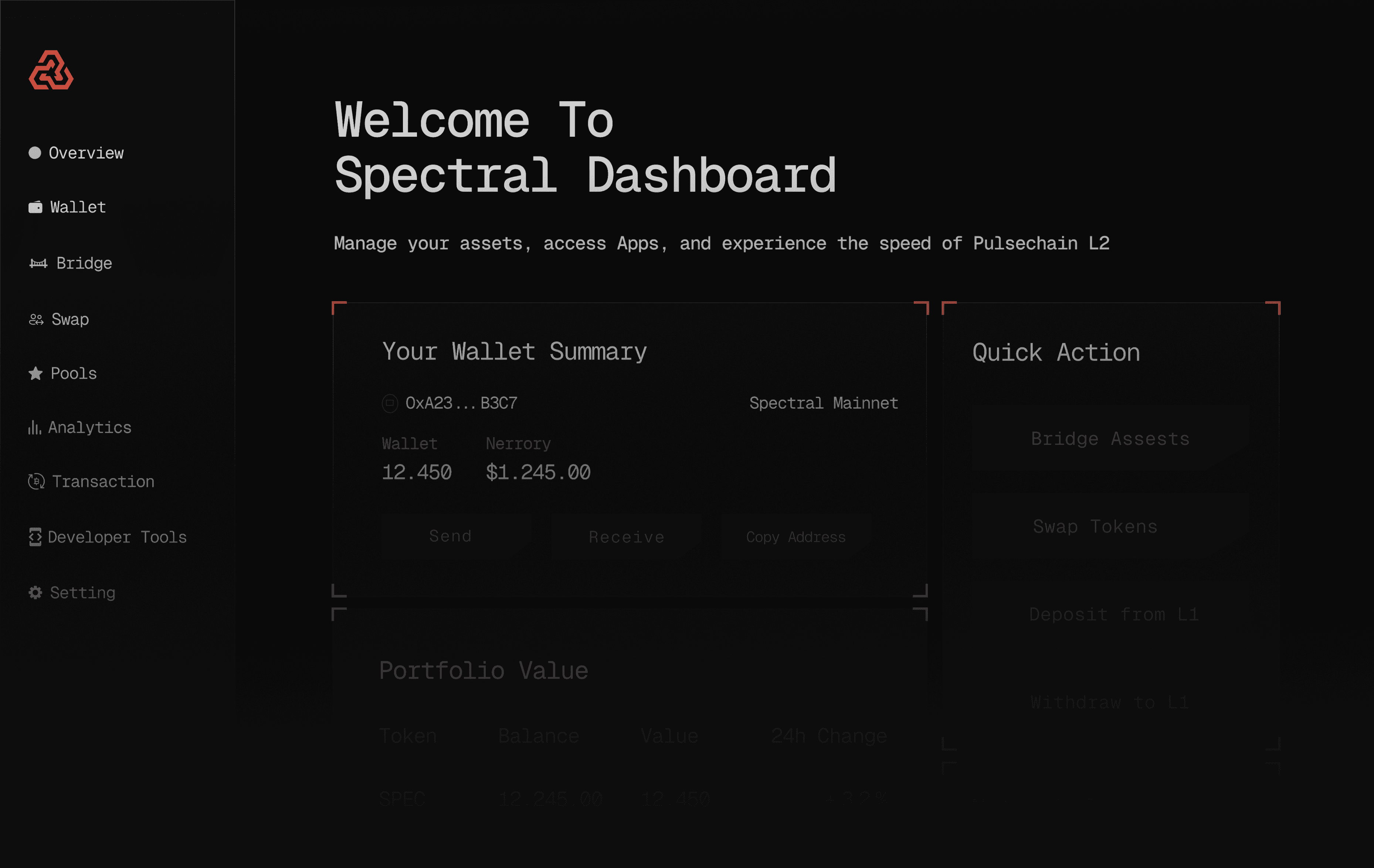
Features
Features
Features
Layer 2, Reimagined
Layer 2, Reimagined
Layer 2, Reimagined
A fast, secure Layer 2 flow — from deployment to final settlement, powered by zero-knowledge and Pulsechain integrity.
Near-Instant Finality
Confirm transactions within seconds no delays, no bottlenecks.
Near-Instant Finality
Confirm transactions within seconds no delays, no bottlenecks.
Near-Instant Finality
Confirm transactions within seconds no delays, no bottlenecks.
ZK-Rollup Security
All Layer 2 activity is cryptographically proven and secured by Pulsechain.
ZK-Rollup Security
All Layer 2 activity is cryptographically proven and secured by Pulsechain.
ZK-Rollup Security
All Layer 2 activity is cryptographically proven and secured by Pulsechain.
Ultra-Low Fees
Pay less than a cent per transaction, no matter the network congestion.
Ultra-Low Fees
Pay less than a cent per transaction, no matter the network congestion.
Ultra-Low Fees
Pay less than a cent per transaction, no matter the network congestion.
How it Works
How it Works
How it Works
How it Works
How it Works
How it Works
PulpChain is a modular L2 built on Pulsechain’s security, offering fast execution, seamless bridging, and EVM-ready tools for developers.
1
Build on Pulpchain
Build on Pulpchain
Deploy smart contracts or dApps on Pulpchain using familiar EVM tools.
Deploy smart contracts or dApps on Pulpchain using familiar EVM tools.
2
User Transact on L2
User Transact on L2
Users enjoy low-cost, high-speed interactions.
Users enjoy low-cost, high-speed interactions.
3
Settle on Pulsechain
Settle on Pulsechain
All state changes are cryptographically verified and posted to Pulsechain for maximum security.
All state changes are cryptographically verified and posted to Pulsechain for maximum security.
About Pulpchain
About Pulpchain
About Pulpchain
What is Pulpchain?
What is Pulpchain?
What is Pulpchain?
Pulpchain is a next-generation Layer 2 network built on Pulsechain. Using zero-knowledge rollups, it enables fast, low-cost, and trustless transactions while maintaining the security of Pulsechain’s Layer 1. Whether you’re minting NFTs, building dApps, trading tokens, or launching DAOs — Pulpchain offers a seamless, EVM-compatible experience optimized for scale.
Testimonial
Testimonial
Testimonial
What Builders are Saying
What Builders are Saying
What Builders are Saying
Discover the applications already building on our Layer 2 infrastructure
Launching DAOs on Spectral is smooth and gasless. Our community voted on proposals without spending a dime — onboarding non-dev users has never been this easy

Layla
Founder of SpecMint
Launching DAOs on Spectral is smooth and gasless. Our community voted on proposals without spending a dime — onboarding non-dev users has never been this easy
Layla
Founder of SpecMint
Spectral feels like the L2 Pulsechain actually needed. Fast deployments, almost no gas, and I didn’t even have to change my Hardhat setup.

Alex EthOrca
Full-Stack Web3 Dev
Spectral feels like the L2 Pulsechain actually needed. Fast deployments, almost no gas, and I didn’t even have to change my Hardhat setup.
Alex EthOrca
Full-Stack Web3 Dev
Spectral feels like the L2 Pulsechain actually needed. Fast deployments, almost no gas, and I didn’t even have to change my Hardhat setup.
Alex EthOrca
Full-Stack Web3 Dev
Spectral feels like the L2 Pulsechain actually needed. Fast deployments, almost no gas, and I didn’t even have to change my Hardhat setup.
Alex EthOrca
Full-Stack Web3 Dev
Pulpchain feels like the L2 Pulsechain actually needed. Fast deployments, almost no gas, and I didn’t even have to change my Hardhat setup.
Alex EthOrca
Full-Stack Web3 Dev
Pulpchain feels like the L2 Pulsechain actually needed. Fast deployments, almost no gas, and I didn’t even have to change my Hardhat setup.
Alex EthOrca
Full-Stack Web3 Dev
Pulpchain feels like the L2 Pulsechain actually needed. Fast deployments, almost no gas, and I didn’t even have to change my Hardhat setup.
Alex EthOrca
Full-Stack Web3 Dev
Pulpchain feels like the L2 Pulsechain actually needed. Fast deployments, almost no gas, and I didn’t even have to change my Hardhat setup.
Alex EthOrca
Full-Stack Web3 Dev
Pulpchain feels like the L2 Pulsechain actually needed. Fast deployments, almost no gas, and I didn’t even have to change my Hardhat setup.
Alex EthOrca
Full-Stack Web3 Dev
Launching DAOs on Pulpchain is smooth and gasless. Our community voted on proposals without spending a dime — onboarding non-dev users has never been this easy
Layla
Founder of SpecMint
Launching DAOs on Pulpchain is smooth and gasless. Our community voted on proposals without spending a dime — onboarding non-dev users has never been this easy
Layla
Founder of SpecMint
Launching DAOs on Pulpchain is smooth and gasless. Our community voted on proposals without spending a dime — onboarding non-dev users has never been this easy
Layla
Founder of SpecMint
Pulpchain feels like the L2 Pulsechain actually needed. Fast deployments, almost no gas, and I didn’t even have to change my Hardhat setup.
Alex EthOrca
Full-Stack Web3 Dev
Pulpchain feels like the L2 Pulsechain actually needed. Fast deployments, almost no gas, and I didn’t even have to change my Hardhat setup.
Alex EthOrca
Full-Stack Web3 Dev
100
Happy Users
89.99%
Uptime
99M+
Tracked
FAQs
FAQs
FAQs
Questions Asked By You
Questions Asked By You
Questions Asked By You
Discover the applications already building on our Layer 2 infrastructuren our Layer 2 infrastructure
What is Pulpchain, and how does it enhance PulseChain?
Pulpchain is a Layer 2 scaling solution for PulseChain, using Optimistic Rollups to process transactions off-chain while leveraging PulseChain’s security. It enhances PulseChain by offering faster transactions (up to 10,000 TPS) and lower fees (sub-cent costs), ideal for high-volume dApps like DeFi and gaming.
Why should I use Pulpchain instead of transacting directly on PulseChain?
Pulpchain provides significantly lower transaction fees (e.g., 90% cheaper than PulseChain’s already low fees) and near-instant confirmations, making it better for micro-transactions, NFT minting, or frequent DeFi trades, while still settling securely on PulseChain.
How does Pulpchain ensure security while processing transactions off-chain?
Pulpchain inherits PulseChain’s security through fraud proofs in its Optimistic Rollup design. Transactions are posted to PulseChain’s Layer 1, allowing anyone to challenge invalid transactions within a 7-day dispute period, ensuring trustless security.
Can I bridge assets between PulseChain and Pulpchain?
Yes, users can bridge PLS, PRC-20 tokens, and NFTs between PulseChain and Pulpchain using a secure bridge smart contract. Deposits take ~10 minutes, withdrawals up to 7 days due to fraud-proof checks, with minimal bridging fees.
How do I connect my wallet to Pulpchain?
Add Pulpchain network to MetaMask or other wallets using the provided RPC URL (e.g., https://rpc.yourlayer2.com), chain ID, and PLS as the native currency. Detailed guides are available on our website’s “Get Started” page.
What are the transaction fees on Pulpchain compared to PulseChain?
ransaction fees on Pulpchain average $0.001 per transaction, compared to PulseChain’s ~$0.01-$0.10, depending on network congestion. Fees are paid in PLS and partially burned, aligning with PulseChain’s deflationary model.
What tools or SDKs are available for developers building on Pulpchain?
Developers can access Pulpchain SDK, including APIs for transaction batching and contract deployment, plus a testnet faucet. Documentation and tutorials are available on our GitHub and developer portal.
Does Pulpchain support smart contracts, and are they compatible with PulseChain’s EVM?
Yes, Pulpchain supports Ethereum-compatible smart contracts via its EVM-equivalent environment, allowing developers to deploy dApps built for PulseChain with minimal changes, using Solidity or Vyper.
Does Pulpchain have its own native token, or does it use PLS?
Pulpchain uses PLS as its native token for transaction fees and bridging, ensuring seamless integration with PulseChain’s economy and avoiding the need for a separate token.
Does Pulpchain support smart contracts, and are they compatible with PulseChain’s EVM?
Yes, Pulpchain supports Ethereum-compatible smart contracts via its EVM-equivalent environment, allowing developers to deploy dApps built for PulseChain with minimal changes, using Solidity or Vyper.
Are there incentives for users or validators on Pulpchain?
Early users receive airdropped fee credits for transactions, and validators running sequencer nodes earn 50% of transaction fees. Staking PLS to secure the network also offers up to 5% annual rewards.
Is Pulpchain audited, and where can I view the audit reports?
Yes, Pulpchain has been audited by [Reputable Audit Firm]. Full audit reports are publicly available on our website’s “Security” section and GitHub repository for transparency.
Where can I find tutorials or guides for using Pulpchain?
Visit our “Help Center” for step-by-step tutorials, video guides, and FAQs on bridging, wallet setup, and dApp usage. Additional resources are shared on our Discord and YouTube channels.
How can I join the Pulpchain community or contribute to its development?
Join our Discord or Telegram for community discussions, or contribute code via our GitHub. We also host developer bounties and AMAs to encourage participation in Pulpchain’s growth.
What is Pulpchain, and how does it enhance PulseChain?
Pulpchain is a Layer 2 scaling solution for PulseChain, using Optimistic Rollups to process transactions off-chain while leveraging PulseChain’s security. It enhances PulseChain by offering faster transactions (up to 10,000 TPS) and lower fees (sub-cent costs), ideal for high-volume dApps like DeFi and gaming.
Why should I use Pulpchain instead of transacting directly on PulseChain?
Pulpchain provides significantly lower transaction fees (e.g., 90% cheaper than PulseChain’s already low fees) and near-instant confirmations, making it better for micro-transactions, NFT minting, or frequent DeFi trades, while still settling securely on PulseChain.
How does Pulpchain ensure security while processing transactions off-chain?
Pulpchain inherits PulseChain’s security through fraud proofs in its Optimistic Rollup design. Transactions are posted to PulseChain’s Layer 1, allowing anyone to challenge invalid transactions within a 7-day dispute period, ensuring trustless security.
Can I bridge assets between PulseChain and Pulpchain?
Yes, users can bridge PLS, PRC-20 tokens, and NFTs between PulseChain and Pulpchain using a secure bridge smart contract. Deposits take ~10 minutes, withdrawals up to 7 days due to fraud-proof checks, with minimal bridging fees.
How do I connect my wallet to Pulpchain?
Add Pulpchain network to MetaMask or other wallets using the provided RPC URL (e.g., https://rpc.yourlayer2.com), chain ID, and PLS as the native currency. Detailed guides are available on our website’s “Get Started” page.
What are the transaction fees on Pulpchain compared to PulseChain?
ransaction fees on Pulpchain average $0.001 per transaction, compared to PulseChain’s ~$0.01-$0.10, depending on network congestion. Fees are paid in PLS and partially burned, aligning with PulseChain’s deflationary model.
What tools or SDKs are available for developers building on Pulpchain?
Developers can access Pulpchain SDK, including APIs for transaction batching and contract deployment, plus a testnet faucet. Documentation and tutorials are available on our GitHub and developer portal.
Does Pulpchain support smart contracts, and are they compatible with PulseChain’s EVM?
Yes, Pulpchain supports Ethereum-compatible smart contracts via its EVM-equivalent environment, allowing developers to deploy dApps built for PulseChain with minimal changes, using Solidity or Vyper.
Does Pulpchain have its own native token, or does it use PLS?
Pulpchain uses PLS as its native token for transaction fees and bridging, ensuring seamless integration with PulseChain’s economy and avoiding the need for a separate token.
Does Pulpchain support smart contracts, and are they compatible with PulseChain’s EVM?
Yes, Pulpchain supports Ethereum-compatible smart contracts via its EVM-equivalent environment, allowing developers to deploy dApps built for PulseChain with minimal changes, using Solidity or Vyper.
Are there incentives for users or validators on Pulpchain?
Early users receive airdropped fee credits for transactions, and validators running sequencer nodes earn 50% of transaction fees. Staking PLS to secure the network also offers up to 5% annual rewards.
Is Pulpchain audited, and where can I view the audit reports?
Yes, Pulpchain has been audited by [Reputable Audit Firm]. Full audit reports are publicly available on our website’s “Security” section and GitHub repository for transparency.
Where can I find tutorials or guides for using Pulpchain?
Visit our “Help Center” for step-by-step tutorials, video guides, and FAQs on bridging, wallet setup, and dApp usage. Additional resources are shared on our Discord and YouTube channels.
How can I join the Pulpchain community or contribute to its development?
Join our Discord or Telegram for community discussions, or contribute code via our GitHub. We also host developer bounties and AMAs to encourage participation in Pulpchain’s growth.
What is Pulpchain, and how does it enhance PulseChain?
Pulpchain is a Layer 2 scaling solution for PulseChain, using Optimistic Rollups to process transactions off-chain while leveraging PulseChain’s security. It enhances PulseChain by offering faster transactions (up to 10,000 TPS) and lower fees (sub-cent costs), ideal for high-volume dApps like DeFi and gaming.
Why should I use Pulpchain instead of transacting directly on PulseChain?
Pulpchain provides significantly lower transaction fees (e.g., 90% cheaper than PulseChain’s already low fees) and near-instant confirmations, making it better for micro-transactions, NFT minting, or frequent DeFi trades, while still settling securely on PulseChain.
How does Pulpchain ensure security while processing transactions off-chain?
Pulpchain inherits PulseChain’s security through fraud proofs in its Optimistic Rollup design. Transactions are posted to PulseChain’s Layer 1, allowing anyone to challenge invalid transactions within a 7-day dispute period, ensuring trustless security.
Can I bridge assets between PulseChain and Pulpchain?
Yes, users can bridge PLS, PRC-20 tokens, and NFTs between PulseChain and Pulpchain using a secure bridge smart contract. Deposits take ~10 minutes, withdrawals up to 7 days due to fraud-proof checks, with minimal bridging fees.
How do I connect my wallet to Pulpchain?
Add Pulpchain network to MetaMask or other wallets using the provided RPC URL (e.g., https://rpc.yourlayer2.com), chain ID, and PLS as the native currency. Detailed guides are available on our website’s “Get Started” page.
What are the transaction fees on Pulpchain compared to PulseChain?
ransaction fees on Pulpchain average $0.001 per transaction, compared to PulseChain’s ~$0.01-$0.10, depending on network congestion. Fees are paid in PLS and partially burned, aligning with PulseChain’s deflationary model.
What tools or SDKs are available for developers building on Pulpchain?
Developers can access Pulpchain SDK, including APIs for transaction batching and contract deployment, plus a testnet faucet. Documentation and tutorials are available on our GitHub and developer portal.
Does Pulpchain support smart contracts, and are they compatible with PulseChain’s EVM?
Yes, Pulpchain supports Ethereum-compatible smart contracts via its EVM-equivalent environment, allowing developers to deploy dApps built for PulseChain with minimal changes, using Solidity or Vyper.
Does Pulpchain have its own native token, or does it use PLS?
Pulpchain uses PLS as its native token for transaction fees and bridging, ensuring seamless integration with PulseChain’s economy and avoiding the need for a separate token.
Does Pulpchain support smart contracts, and are they compatible with PulseChain’s EVM?
Yes, Pulpchain supports Ethereum-compatible smart contracts via its EVM-equivalent environment, allowing developers to deploy dApps built for PulseChain with minimal changes, using Solidity or Vyper.
Are there incentives for users or validators on Pulpchain?
Early users receive airdropped fee credits for transactions, and validators running sequencer nodes earn 50% of transaction fees. Staking PLS to secure the network also offers up to 5% annual rewards.
Is Pulpchain audited, and where can I view the audit reports?
Yes, Pulpchain has been audited by [Reputable Audit Firm]. Full audit reports are publicly available on our website’s “Security” section and GitHub repository for transparency.
Where can I find tutorials or guides for using Pulpchain?
Visit our “Help Center” for step-by-step tutorials, video guides, and FAQs on bridging, wallet setup, and dApp usage. Additional resources are shared on our Discord and YouTube channels.
How can I join the Pulpchain community or contribute to its development?
Join our Discord or Telegram for community discussions, or contribute code via our GitHub. We also host developer bounties and AMAs to encourage participation in Pulpchain’s growth.